Keeping tires properly inflated is one of those small maintenance habits that quietly affects a lot of bigger things: how a car handles, how much fuel it burns, how evenly the tread wears down, and how safe a vehicle feels at highway speed. Yet for many drivers, checking tire pressure regularly still falls somewhere between “meaning to” and “forgetting until the dashboard warning light comes on.” Part of the reason is convenience. Driving to a gas station, digging around for quarters, and wrestling with a compressor hose that never seems to fit right isn’t exactly appealing on a cold morning or after a long day.
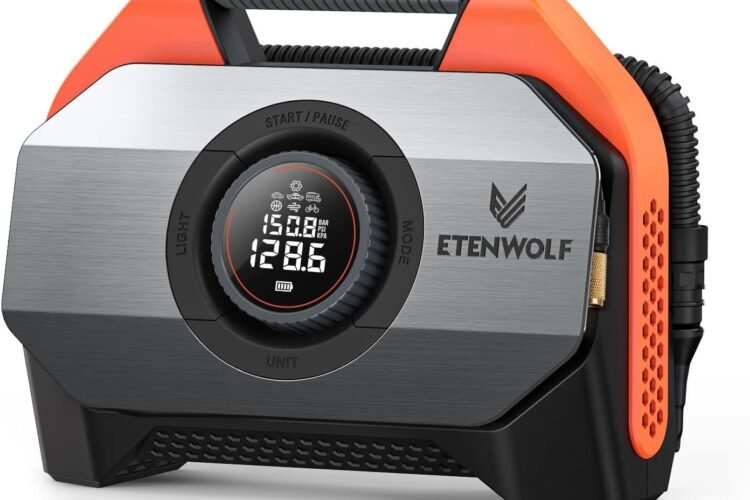
This is the gap that portable, battery-powered tire inflators are designed to fill. Instead of relying on an outlet or a gas station air pump, cordless models let you handle inflation tasks right in your driveway, garage, or even on the side of the road. The ETENWOLF VORTEX S6 is one entry in this growing category — a rechargeable air compressor built around a 19200mAh battery, a dual-cylinder pump design, and a stated 100% duty cycle rating, all packaged in a bright orange housing with an integrated LED work light.
This article walks through what the VORTEX S6 offers on paper, the kinds of situations where a tool like this tends to be useful, who might find it worth considering, and some practical points to think through before adding one to your car care kit. The goal here isn’t to tell you this is the “best” inflator on the market — that’s a subjective call that depends on your specific needs — but rather to give you a clear, balanced picture of what this type of product does and how it fits into everyday vehicle maintenance.
Why Portable Tire Inflators Have Become So Popular
Before getting into the specifics of this particular model, it helps to understand why cordless tire inflators have grown into such a common category of automotive accessory over the past several years.
Traditional options for airing up a tire have always had drawbacks. Gas station air pumps are often out of order, require coins or a card swipe, and don’t always give an accurate reading. Compressors that plug into a car’s 12V outlet work, but they tie you to the vehicle, require the engine to be running in many cases, and come with a cord that can be awkward to manage around a vehicle. Manual pumps and bike-style hand pumps get the job done for smaller inflatables but demand a fair amount of physical effort for something like a full-size tire.
Battery-powered inflators try to solve these frustrations by combining portability with power. Because they run on an internal rechargeable battery rather than a wall outlet or a vehicle’s electrical system, they can be used away from a car entirely — which matters more than it might first seem, since these tools are increasingly used for inflatable kayaks, paddleboards, sports balls, camping gear, pool floats, and bicycle tires, not just car tires. A single device that can handle a flat tire on Monday and a bike tire or paddleboard on Saturday has an obvious appeal for households that own a mix of vehicles and gear.
Key Features of the ETENWOLF VORTEX S6
A High-Capacity 19200mAh Battery
The standout spec on this model is its battery capacity. At 19200mAh, it’s positioned toward the higher end of what’s typically found in portable inflators, many of which sit in the 2,000mAh to 8,000mAh range. In practical terms, a larger battery generally translates to more total inflation cycles per charge and a bit more staying power for tackling multiple tires, or larger volume items like truck tires or bigger inflatables, before needing to recharge.
It’s worth noting that actual results with any battery-powered tool depend on several variables — ambient temperature, how depleted the tires are to start, the size of what you’re inflating, and how the battery has been treated over its lifespan all play a role. A large capacity rating is a helpful reference point, but real-world performance will vary from one use case to another.
Dual-Cylinder Pump Design
Many entry-level portable inflators use a single-cylinder pump mechanism. The VORTEX S6 instead uses a dual-cylinder design, which is a structural approach intended to move air more efficiently per pump cycle compared to a single-cylinder setup. In practice, dual-cylinder pumps are often associated with faster inflation times and are commonly found in inflators marketed toward larger vehicles, including trucks and SUVs, where tires hold a greater volume of air than a compact car’s tires.
100% Duty Cycle Rating
Duty cycle refers to how long a compressor can run continuously before it needs to pause and cool down. Many small compressors are only rated for partial duty cycles — meaning they’re designed to run for a set number of minutes and then rest for a period before continuing, to avoid overheating the motor. A 100% duty cycle rating suggests the unit is built to run continuously without a mandatory cooldown period, which can be a meaningful factor if you’re inflating several tires in one session, filling a large inflatable, or otherwise using the device for an extended stretch of time.
As with all manufacturer specifications, duty cycle ratings reflect conditions tested by the manufacturer, and real-world variables like heat, altitude, and how well the unit has been maintained can affect sustained performance.
LED Backlight and Digital Display
Roadside tire trouble doesn’t always happen in good lighting. An integrated LED light is a feature aimed at making the tool usable after dark or in dim garages, without needing to hold a separate flashlight or rely on a phone’s flashlight app while trying to also manage a hose and gauge. Alongside the light, inflators in this category typically include a digital display to show current tire pressure, which allows you to inflate to a specific target (often measured in PSI, BAR, or kPa) rather than guessing by feel.
Cordless, Compact Design
Being cordless means the unit isn’t tethered to a car’s 12V socket or a wall outlet, giving it more flexibility for use away from a vehicle. Its compact form factor is generally intended to make it easy to store in a trunk, glovebox, garage shelf, or camping bag, so it can be kept on hand rather than left at home when needed.
Vivid Orange Housing
While largely a design and visibility choice rather than a functional one, the bright orange color is worth mentioning because high-visibility casing can make a small tool easier to spot in a cluttered trunk, garage, or emergency kit — a minor but genuinely practical detail for a product meant to be grabbed quickly.
How It Can Be Used
One of the appealing aspects of this category of tool is its versatility. A cordless inflator with the specs described above could reasonably be used in a range of scenarios, including:
- Routine tire maintenance. Checking and topping off tire pressure on a regular schedule — something many drivers know they should do monthly but often skip — becomes considerably easier when the tool is cordless and doesn’t require finding a working gas station pump.
- Seasonal pressure adjustments. Tire pressure naturally fluctuates with temperature changes. As the weather cools, tires can lose pressure, and a portable inflator makes it simple to correct this at home rather than waiting for a dashboard alert.
- Roadside situations. A slow leak or a tire that’s lost pressure unexpectedly can sometimes be temporarily addressed with an inflator, giving a driver enough air to safely reach a repair shop (this is not a substitute for proper tire repair or replacement when there’s significant damage).
- Bicycles. Cyclists often need a different pressure range and valve type than car tires use, and many portable inflators, including dual-cylinder designs, are built to accommodate both Presta and Schrader valves with the right adapters.
- Recreational inflatables. Pool floats, inflatable kayaks, paddleboards, and camping air mattresses all require inflation, and manually filling larger items by mouth or hand pump can be tiring. A motorized inflator can significantly cut down the time and effort involved.
- Sports equipment. Basketballs, footballs, and soccer balls typically need occasional top-offs, and a small inflator with the right needle attachment can handle this quickly.
- Emergency preparedness. Because it’s battery-powered and doesn’t depend on a running engine, a charged inflator can be a useful item to keep in a roadside emergency kit alongside things like a flashlight, jumper cables, and a first-aid kit.
Who It May Be Suitable For
Given the range of uses above, a few types of owners might find this kind of product particularly relevant:
Everyday commuters who want a straightforward way to maintain proper tire pressure without regularly stopping at a gas station, particularly those who’ve experienced the mild hassle of hunting down a working air pump.
Households with multiple vehicles, since a shared inflator can service cars, trucks, and SUVs without needing a separate tool for each.
Outdoor and recreational enthusiasts who own kayaks, paddleboards, camping gear, or other inflatables and want one device that can handle both vehicle tires and recreational equipment.
Cyclists who ride regularly and want a faster, more precise alternative to a hand pump, especially for higher-pressure road bike tires.
Drivers who prioritize preparedness, such as those who do a lot of highway driving, live in areas with harsh winters, or simply like having a self-sufficient solution in the trunk for unexpected situations.
That said, this type of tool isn’t necessarily essential for every driver. Someone who drives infrequently, has easy and consistent access to a reliable air pump, or doesn’t own any inflatable recreational gear may not get as much use out of a dedicated device like this. It’s worth being honest with yourself about how often you’d actually reach for it.
Important Things to Consider
No single product is a perfect fit for every situation, and it’s worth thinking through a few practical points before deciding whether a cordless inflator like this matches your needs.
Charging habits matter. A cordless tool is only as useful as its battery allows. If you tend to forget to recharge devices after use, there’s a real risk of reaching for the inflator during an emergency only to find it depleted. Building a habit of topping off the charge after each use, or checking it periodically, helps ensure it’s ready when needed.
Understand the accessories and adapters. Different inflation tasks call for different nozzle types — a standard tire valve, a Presta valve for certain bikes, and various inflatable nozzles for sports balls or air mattresses all typically require different attachments. It’s worth checking what’s included in the box and confirming those attachments cover the items you actually plan to inflate.
Duty cycle and real-world use aren’t identical. A 100% duty cycle rating is a strong indicator of sustained performance, but external factors like ambient temperature and the size of what’s being inflated will still influence how the device performs over an extended session.
Battery capacity claims should be viewed as a guideline. A 19200mAh rating gives you a sense of scale relative to other inflators, but the number of tires or items you can inflate on a single charge will vary depending on how depleted they are and their volume.
Storage conditions affect battery longevity. Like most rechargeable lithium-based tools, storing the unit in extreme heat or cold for long periods can affect battery life over time. Keeping it in a temperature-moderate space when possible is generally good practice.
It’s a maintenance tool, not a repair tool. An inflator can add air to a tire, but it can’t fix a puncture, a sidewall issue, or a valve stem problem. If a tire is consistently losing pressure, that’s a sign to get it inspected by a professional rather than relying on repeated top-offs.
Read the included instructions for pressure settings. Digital displays and auto-shutoff features (when present) are usually most useful when you know your vehicle’s recommended PSI in advance, which is typically listed on a sticker inside the driver’s door frame or in the owner’s manual — not on the tire’s sidewall, which shows the maximum pressure rather than the recommended one.
Comparing General Categories of Tire Inflators
To put this product in context, it can help to understand the broader landscape of tire inflation tools, without focusing on any single competing brand.
Corded 12V compressors plug directly into a vehicle’s power outlet. They tend to draw power directly from the car battery, which means they don’t have their own battery to manage, but they also require the vehicle to be nearby (and often running) and limit use to situations where you’re at or near the car.
Wall-outlet compressors are typically bulkier, garage-based units meant for home use, workshops, or more demanding jobs. They usually offer more sustained power but sacrifice the portability that makes cordless models appealing for on-the-go situations.
Manual and foot pumps require no batteries or electricity at all, making them dependable in a pinch, but they demand considerably more physical effort and time, especially for larger tires.
Cordless, battery-powered inflators — the category this product belongs to — aim to strike a balance between portability and power. They can be used away from a vehicle entirely, which opens them up to recreational and multi-purpose uses beyond just car tires, though they depend on the user remembering to keep them charged.
Each category has trade-offs, and the “right” choice generally comes down to how and where you expect to use the tool, how often, and how much you value portability versus raw sustained power.
Frequently Asked Questions
Does a portable inflator replace the need for professional tire service? No. A portable inflator is a maintenance and convenience tool for adding air. It doesn’t repair punctures, patch leaks, or address structural tire damage. If a tire is losing air repeatedly, it should be inspected by a qualified technician.
Can this type of inflator be used for things other than car tires? Generally, yes. Devices in this category are commonly used for bicycle tires, sports balls, and inflatables like paddleboards or pool floats, provided the correct nozzle attachment is used and the item’s recommended pressure isn’t exceeded.
How do I know what pressure to inflate my car tires to? Check the sticker typically located on the inside of the driver’s side door frame, the fuel filler door, or the vehicle’s owner’s manual. This shows the manufacturer’s recommended PSI, which is different from the maximum pressure listed on the tire’s sidewall.
Does battery capacity guarantee a certain number of tires per charge? Not precisely. Battery capacity (measured in mAh) gives a general sense of runtime, but the actual number of items you can inflate on a single charge depends on factors like how depleted each tire is, tire size, and ambient temperature.
What does “100% duty cycle” mean in practical terms? It generally indicates the compressor is designed to run continuously without requiring a mandatory rest period, which can be helpful for longer inflation sessions involving multiple items.
Is it normal for the device to get warm during use? Some warmth during operation is typical for compressor motors, particularly during extended use. If you notice unusual overheating, excessive noise, or a burning smell, it’s best to stop use and refer to the manufacturer’s guidance.
How should the inflator be stored between uses? Most manufacturers recommend keeping rechargeable tools in a moderate-temperature, dry location, and periodically topping off the charge so it’s ready when needed — especially if it’s meant to serve as part of an emergency kit.
Final Thoughts
Tire maintenance is one of those responsibilities that’s easy to put off, mostly because the “easy” way to do it has traditionally been anything but easy. Cordless inflators like the ETENWOLF VORTEX S6 are part of a broader shift toward making basic vehicle upkeep less of a chore — combining a sizable 19200mAh battery, a dual-cylinder design intended for efficient airflow, a 100% duty cycle rating, and practical touches like an LED light, all in a compact, cordless package.
Whether a tool like this makes sense for you really depends on your driving habits, how many vehicles or inflatable items you own, and how much you value having a self-sufficient option on hand rather than relying on external air pumps. For some drivers, it becomes a small but frequently used addition to the trunk. For others, especially those who rarely need to adjust tire pressure or who already have reliable access to air pumps, it may be less of a priority.
As with any tool, it helps to weigh the specifications against your actual needs, keep realistic expectations about battery life and duty cycle in varying conditions, and remember that an inflator is a maintenance aid — not a substitute for regular tire inspections or professional repair when something more serious comes up.