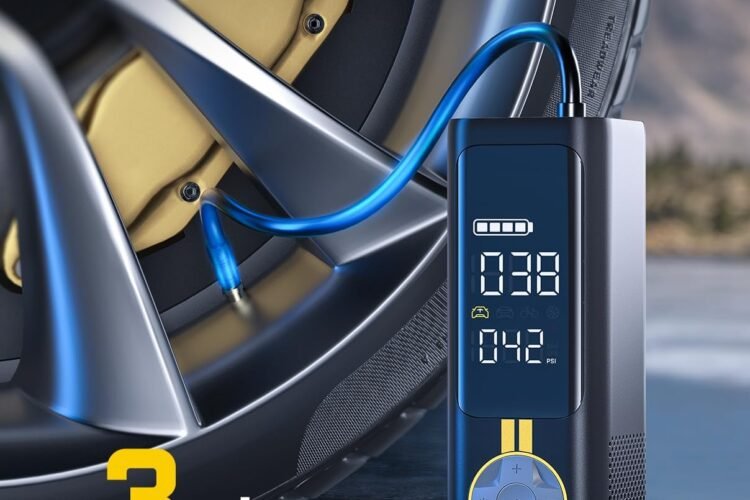
Keeping your tires properly inflated is one of those small maintenance habits that quietly affects almost everything about how a vehicle performs — fuel efficiency, tire lifespan, ride comfort, and even braking distance. Yet it’s also one of the most commonly neglected tasks, mostly because checking and adding air used to mean a trip to a gas station or fumbling with a bulky, corded compressor in a garage. Portable cordless inflators have changed that equation considerably, and the Fanttik X8 APEX EV is one of the newer entries into this growing category of compact, battery-powered air pumps designed for everyday drivers, cyclists, and even electric vehicle owners.
This article takes a practical, education-first look at what this type of product typically offers, how it might fit into different lifestyles, and what things are worth thinking about before adding one to your car essentials or garage toolkit.
Introduction
As more households own multiple vehicles — cars, e-bikes, scooters, and increasingly electric vehicles — the demand for versatile, easy-to-use inflation tools has grown. The Fanttik X8 APEX EV positions itself within this space as a cordless, rechargeable tire inflator built to handle a range of inflation needs, from car and motorcycle tires to bicycle tires and inflatable sports equipment like basketballs or soccer balls.
Marketed with a claimed “2X faster inflation” speed and a 150 PSI maximum pressure rating, the device is designed to appeal to people who want a single tool that can handle multiple types of inflation tasks without needing to be plugged into a wall outlet or a car’s 12V socket. Its inclusion of “EV” in the product name also signals that the manufacturer is targeting electric vehicle owners specifically, a demographic that has grown substantially in recent years and often has slightly different maintenance habits compared to traditional combustion-engine vehicle owners.
Understanding what a product like this actually offers — beyond marketing language — requires looking at its core features, its intended use cases, and the practical considerations that come with cordless, battery-based tools in general.
Key Features
Cordless, Battery-Powered Operation
One of the defining characteristics of the Fanttik X8 APEX EV is that it operates independently of a direct power source during use. Instead of requiring a cigarette lighter adapter or a wall plug while inflating, the unit relies on an internal rechargeable battery. This is a fairly standard design choice in the modern portable inflator category, and it offers a meaningful convenience benefit: you’re not tethered to your vehicle, which means the tool can just as easily be used on a bicycle in your driveway, a basketball on the court, or even a car parked some distance from a power outlet.
Cordless tools of this kind generally need to be charged in advance, typically via a USB-C cable, and battery life will vary depending on how much inflation work is being done in a single session. Manufacturers often list a certain number of full tire inflations per charge, though real-world results can differ based on tire size, target pressure, and ambient temperature.
Claimed 2X Faster Inflation
The product listing highlights a “2X faster inflation” claim, which generally refers to comparisons against earlier generations of similar cordless inflators or entry-level competitors. Inflation speed in these devices is typically a function of motor power, airflow design, and internal pump architecture. Faster inflation can be a meaningful benefit for anyone who has experienced the mild frustration of standing beside a car for several minutes waiting for a slow pump to bring a tire up to pressure, especially in less-than-ideal weather conditions.
It’s worth noting that “faster” is a relative term, and actual performance will depend on the specific tire size and starting pressure. A motorcycle tire or bicycle tire, for instance, will generally inflate much faster than a large SUV tire regardless of the device used, simply due to the difference in air volume required.
150 PSI Maximum Pressure
A maximum rated pressure of 150 PSI gives this inflator a fairly wide range of practical applications. Standard passenger car tires typically require somewhere between 30 and 35 PSI, while motorcycle tires often sit in a similar or slightly lower range. Bicycle tires, on the other hand, can vary enormously — a mountain bike tire might only need 30-50 PSI, while a narrow road bike tire can require up to 100-120 PSI or more.
Having headroom up to 150 PSI means the device is theoretically capable of handling most consumer inflation needs, including higher-pressure applications, without being pushed to its absolute limit constantly. This can also be relevant for smaller inflatable items that require higher pressure for firmness, such as certain sports balls.
Multi-Purpose Nozzle and Attachment System
Versatility is a central selling point for this type of device. Most cordless inflators in this category, including this one, are typically bundled with a set of interchangeable nozzle attachments designed for different valve types — Schrader valves (common on cars and motorcycles), Presta valves (common on higher-end bicycles), and needle-style attachments for sports balls or other inflatables like paddleboards and small pool floats.
This multi-nozzle approach is what allows a single device to move between such a wide range of applications, from checking your car’s tire pressure before a road trip to topping off a soccer ball before a weekend game.
Digital Display and Preset Pressure Function
Many modern inflators, and this model is generally consistent with that trend, include a digital display screen that shows real-time pressure readings as the tire fills. This is paired with a preset pressure function, where users can input their desired PSI level and the device will automatically stop once that target is reached. This auto-shutoff feature reduces the risk of overinflating a tire, which can be a genuine concern when manually monitoring a gauge, especially in low-light conditions or when multitasking.
Built-In LED Light
Portable inflators designed for broader utility often include a small LED light on the housing, intended to help with visibility during nighttime roadside situations or in dimly lit garages. While a relatively minor feature compared to the pump’s core function, this kind of addition reflects the product’s aim to serve as a general-purpose roadside companion rather than a single-use tool.
Compact, Portable Design
Compared to traditional corded air compressors, which can be bulky and require storage space in a trunk or garage shelf, cordless inflators like this one are generally designed to be compact enough to fit in a glovebox, under-seat storage compartment, or a small bag. This portability is part of what makes them appealing for people who want a tool they can genuinely keep on hand at all times rather than something reserved for occasional garage use.
How It Can Be Used
The versatility suggested by the product’s marketing extends across several everyday scenarios:
Routine Tire Maintenance: Checking tire pressure on a monthly basis is a widely recommended practice, since tires naturally lose a small amount of air over time and pressure can fluctuate with temperature changes, particularly during seasonal transitions. A cordless inflator makes this a quick task that can be done in the driveway without needing to visit a gas station.
Roadside Situations: A slow leak or a tire that’s noticeably low on air isn’t always an emergency, but it can be inconvenient, particularly if you’re far from a service station. Having a compact inflator in the trunk means you can add air temporarily to get to a repair shop safely.
Electric Vehicle Maintenance: EV owners sometimes note that tire wear can occur slightly differently on electric vehicles due to the added weight of the battery pack and the instant torque delivery, which can make consistent tire pressure monitoring particularly relevant. A dedicated inflator kept in the vehicle can support this kind of regular upkeep.
Motorcycles and Bicycles: Motorcycle and bicycle tires often use different valve types and require different pressure ranges than car tires, so having a single tool with adjustable presets and multiple nozzle attachments can simplify maintenance across multiple types of vehicles owned by the same household.
Recreational and Sports Equipment: Basketballs, soccer balls, footballs, and similar inflatables often go soft over time. A compact inflator with a needle attachment offers a quick way to top these up before use, which can be particularly convenient for families with kids involved in sports.
Outdoor and Travel Gear: Some inflatable outdoor items, such as small camping air mattresses or paddleboards, may also be compatible depending on the nozzle attachments included, though it’s worth checking the specific valve compatibility for larger inflatables, since some require higher airflow volume than these tools are designed to provide efficiently.
Who It May Be Suitable For
This type of cordless inflator tends to appeal to a fairly broad range of people, including:
- Everyday car owners who want a simple way to maintain proper tire pressure without relying on gas station air pumps, which are not always free, reliable, or conveniently located.
- Electric vehicle owners who are often particularly attentive to efficiency-related maintenance, since underinflated tires can measurably affect an EV’s range.
- Motorcycle riders, who may appreciate having a lightweight, easy-to-store tool given the more limited storage space on most motorcycles.
- Cyclists, particularly those who own bikes with different valve types across multiple bikes in the same household.
- Parents or families, who might use the device across multiple contexts — from the family car to the kids’ sports equipment.
- Road trip travelers, who may want a reliable backup tool in case of a slow leak far from services.
- People who prioritize convenience and portability over the potentially higher airflow output of larger, corded garage compressors, which remain the more heavy-duty option for very frequent or high-volume inflation needs.
It’s probably less suited to individuals who need to inflate very large volumes of air frequently, such as commercial or fleet vehicle maintenance, where a wall-powered or vehicle-mounted compressor with continuous duty cycles would likely be a more appropriate long-term investment.
Important Things to Consider
Before purchasing any cordless inflator, there are a few practical factors worth keeping in mind:
Battery Life and Charging Habits: Since the unit depends on an internal battery, it needs to be charged periodically even when not in active use, similar to other rechargeable electronics. Letting the battery sit fully depleted for long stretches isn’t generally recommended for lithium-ion batteries, so occasional maintenance charging is worth factoring into ownership.
Heat Buildup During Extended Use: Compact motors doing continuous work, such as inflating multiple large tires back-to-back, can generate heat. Manufacturers typically include some safeguards against overheating, but it’s still sensible to allow brief cooling periods between larger inflation jobs rather than running the device continuously for extended periods.
Accuracy of the Pressure Gauge: While digital displays are generally more precise than old-fashioned analog dial gauges, it’s still good practice to periodically cross-check readings against a separate calibrated gauge, particularly for critical applications where precise tire pressure meaningfully affects safety, such as motorcycle tires.
Valve Compatibility: Not all inflatable items use the same valve type, and while most kits include adapters for the most common ones, it’s worth confirming compatibility with any specialty equipment you plan to use it with before assuming it will work seamlessly.
Noise Level: Compact inflators, due to their smaller motor size operating at higher speeds, can sometimes be louder relative to their size than larger compressors. This is generally not a dealbreaker but worth being aware of if you plan to use it late at night in a residential area.
Storage Conditions: Lithium-ion batteries generally perform best when stored at moderate temperatures. Leaving any battery-powered device in an extremely hot car trunk for long periods during summer isn’t ideal for long-term battery health, regardless of brand or model.
Comparing General Categories of Tire Inflators
To put a cordless inflator like this into broader context, it can help to compare it against other general categories of inflation tools available on the market:
Corded 12V Car Inflators: These plug directly into a vehicle’s power outlet and draw power continuously during use, which means they don’t rely on an internal battery and generally won’t run out of charge mid-task. However, they require the vehicle to be running or have sufficient battery power, and they’re tethered by a cord, limiting use to situations near the car itself.
Wall-Powered Garage Compressors: These are typically larger, heavier-duty units capable of higher continuous airflow, making them well-suited for frequent or high-volume use, such as inflating multiple tires in quick succession or powering pneumatic tools. Their tradeoff is portability — they’re not something you’d carry in a trunk or take camping.
Cordless Battery-Powered Inflators: This is the category the Fanttik X8 APEX EV falls into. These tools prioritize convenience and mobility over raw continuous output, making them well suited to occasional, on-the-go inflation tasks across a variety of item types, from vehicle tires to sports equipment.
Manual Foot or Hand Pumps: The most basic and least expensive category, requiring physical effort and generally much more time to reach target pressure, though they have the benefit of never needing batteries or charging and functioning reliably in any situation.
Each category serves a different practical purpose, and the right choice often depends on how frequently you expect to use the tool, how many types of items you need to inflate, and how much you value portability versus raw power.
Frequently Asked Questions
Does this type of inflator work on electric vehicles specifically?
Cordless inflators like this one are generally compatible with any standard Schrader valve, which is used on the vast majority of passenger vehicles, including most electric vehicles. The “EV” branding usually reflects marketing targeted at that growing ownership segment rather than a technical limitation restricting use to only EVs.
Can it inflate a flat tire completely, or just top off pressure?
Cordless inflators can generally bring a tire from empty to a driveable pressure, though this may take longer than topping off a tire that’s only slightly under-inflated. For a completely flat tire, it’s also worth checking for punctures or damage before relying solely on reinflation, since a slow leak may cause the tire to lose air again quickly.
How long does the battery typically last on a single charge?
This varies depending on tire size, starting pressure, and target pressure, and manufacturers often provide an estimated number of full inflations per charge. It’s reasonable to expect that inflating several car tires in a row will use noticeably more battery than a single bicycle tire or sports ball.
Is it loud to use?
Most compact cordless inflators produce a noticeable motor hum during operation, generally comparable to or slightly louder than a hair dryer, though this varies by model and design.
Can it be used for non-vehicle items like paddleboards or air mattresses?
This generally depends on the nozzle attachments included and the airflow requirements of the specific item. Small inflatables and sports balls are typically well within range, but very large inflatables designed for higher-volume pumps may take considerably longer or may not be the ideal use case.
Does it need to be charged before every use?
Not necessarily, as most users would only need to recharge after the battery has been sufficiently depleted through use. However, checking charge level before a longer trip is generally good practice, similar to charging a phone before travel.
Conclusion
Portable cordless tire inflators like the Fanttik X8 APEX EV reflect a broader shift toward multi-purpose, convenience-oriented tools that fit modern lifestyles — where a single household might own a car, an e-bike, a couple of bicycles, and a garage full of sports equipment, all of which occasionally need air. The appeal of a device like this lies less in any single standout feature and more in the combination of portability, versatility across valve types, and the convenience of not being tied to a power outlet or vehicle.
As with any tool in this category, it’s worth thinking about how it fits your specific needs — whether that’s routine car maintenance, roadside preparedness, supporting an EV’s efficiency, or simply keeping the kids’ sports equipment properly inflated. Comparing your expected frequency of use, the range of items you’ll need to inflate, and how much portability matters to you can help clarify whether a cordless option like this makes sense compared to a corded or garage-based alternative.